Nineteen months, and here is where every one of them goes.
Most builders describe their process in five friendly steps. A house takes nine, four of them happen before anyone digs, and the two that decide whether the schedule holds are design and selections, not construction.
- Stage 01
90 minutes, no chargeFirst meeting
You bring what you have: a lot, a folder of photographs, a plan from another builder, or nothing at all. We bring the last four contracts and show you what those houses actually cost against what they were quoted at. Nobody signs anything. Roughly a third of these meetings end with us saying the house and the budget do not agree yet, which is a better thing to hear in an hour than in a year.
- Stage 02
1 to 3 weeksThe lot
Somebody walks it before you buy, or before we draw. Grade, trees, where the water sits in August, where the power comes in, what the setbacks leave you once the required parking and the drainage are placed, and whether the neighbourhood has a review board with an opinion about roof pitch. This is the cheapest hour in the project and it saves the most money.
- Stage 03
4 to 7 monthsDesign and engineering
You engage the architect and we come along. Halsey Ward and Fonseca Studio draw most of our houses, and you can bring your own. We price the house four times while it is being drawn: at the sketch, at the plan, at the elevation, and at the final permit set. Nobody arrives at month five to find the house is thirty percent over.
- Stage 04
Runs alongside designSelections
Sofia takes this and it is the part that quietly decides whether a schedule holds. Cabinets, tile, plumbing, lighting, hardware, appliances, and the handful of long lead items that stop a house dead if they are ordered late. Every appointment is booked before framing starts rather than during.
- Stage 05
2 weeksContract
A fixed price on the house as drawn, with the allowances printed inside the contract rather than referenced in an appendix, and a completion date we intend to keep. Florida requires a Homeowners' Construction Recovery Fund notice in residential contracts over $2,500, and it is in there. Miguel reads it out loud, because a buyer who is told in advance what he is signing does not need to be reassured later.
- Stage 06
8 to 16 weeksPermitting
This is where the jurisdictions stop being interchangeable. Winter Park runs tree review and design review before building review, so it is the longest. Lake Nona puts a community architectural committee ahead of all of it. Orange County unincorporated is the fastest. We file the day the engineer seals the set, not the week after.
- Stage 07
11 to 16 monthsConstruction
One superintendent, one house. Not four. You get a Friday photograph and a Monday email that says what happened last week, what happens this week, and what we need a decision on. You can walk the site any working day, and on Saturdays bring the children, because a house being framed is the best thing a seven year old will see all year.
- Stage 08
1 weekWalkthrough and the plate
We walk the house twice: once with you and a roll of blue tape, once alone the night before you get the keys. Everything on the tape is closed out before the handover, not after. Then the plate goes on beside the front door, and the house joins the two hundred and fourteen.
- Stage 09
OngoingThe first two years
Everything is covered for a year, mechanical systems for two, structure for ten. A house moves in its first two summers and a few things will need attention. You call Miguel, on the same mobile number you have had since the first meeting, and we come. We do not open the contract to check whether we have to.
The Via Tuscany house, from bare sand to a plate on the wall.
Fourteen months from permit to certificate of occupancy, photographed from the same spot in the street each time. The oak in the frame is the reason the house is an L rather than a rectangle. Scroll to build it.
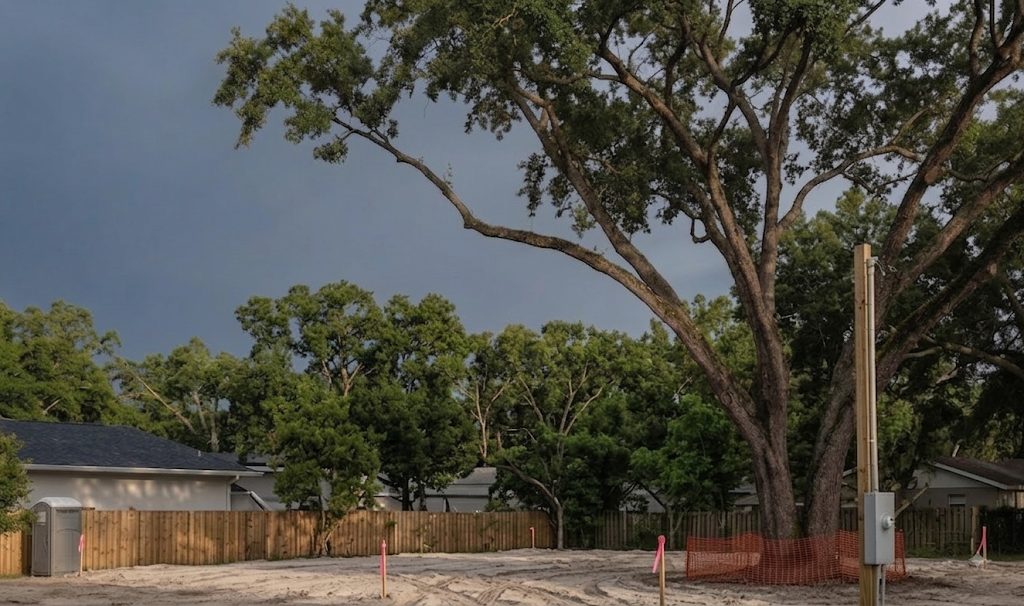 Stage 1 · The lot
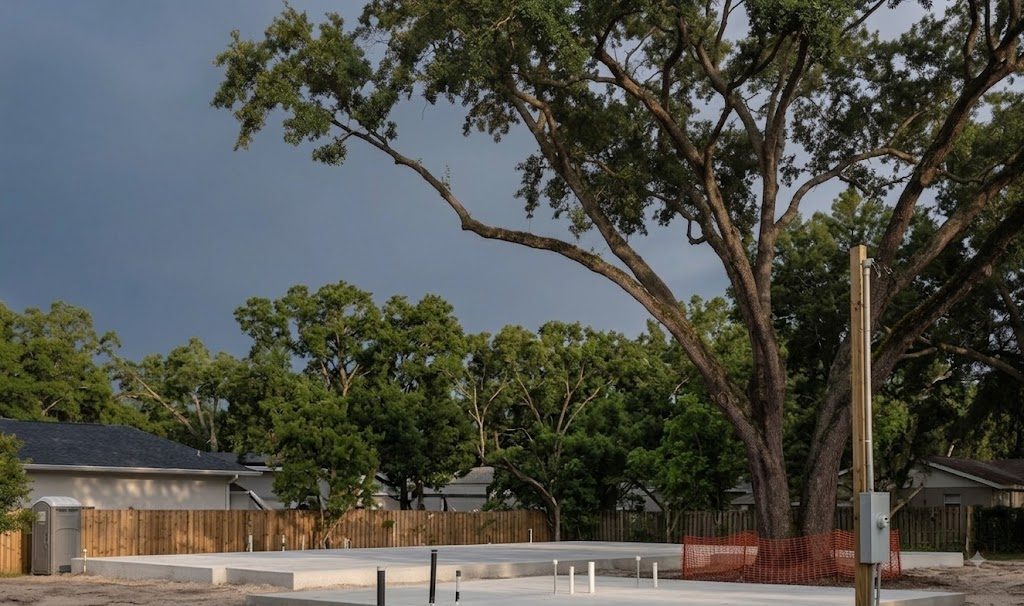 Stage 2 · Slab
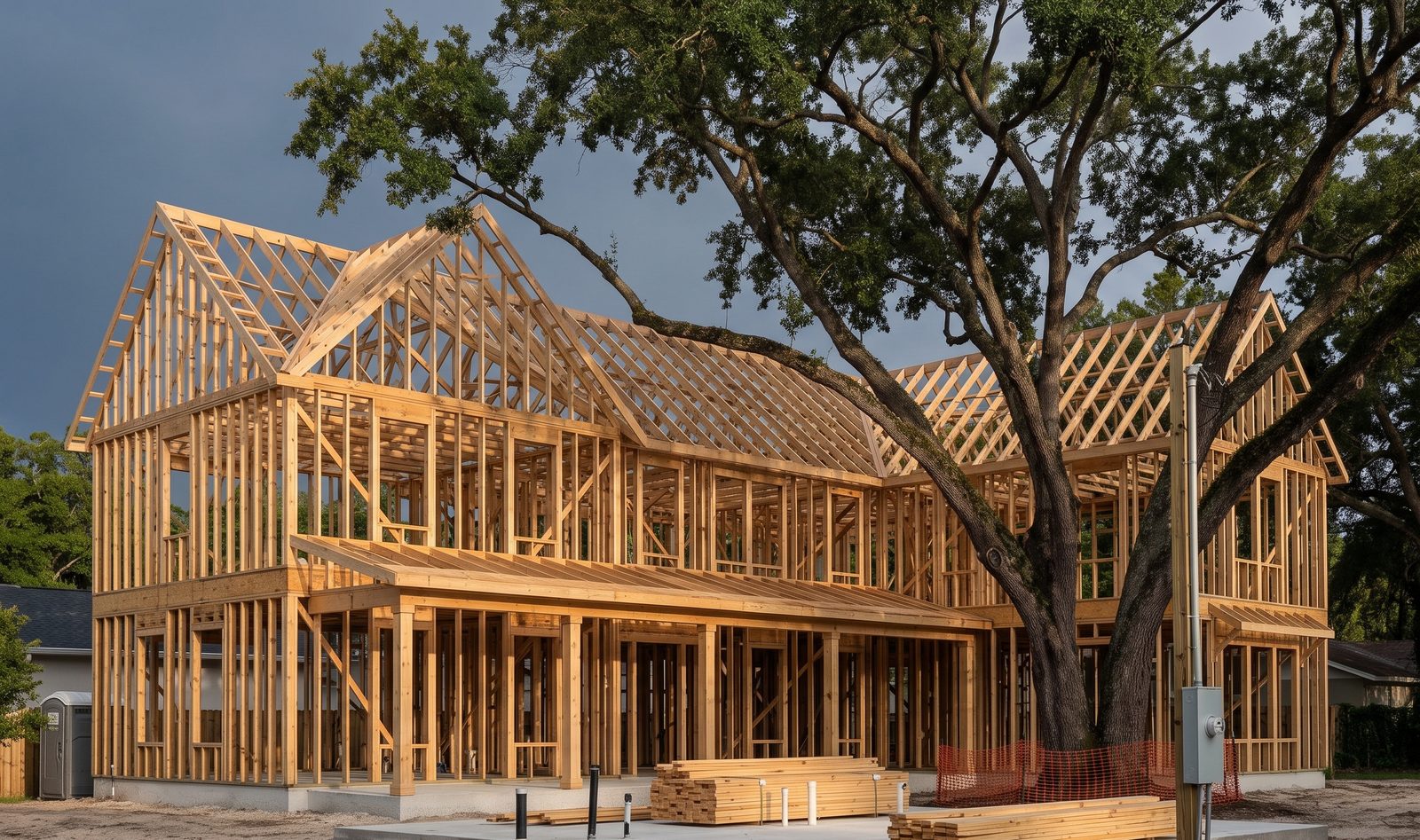 Stage 3 · Frame
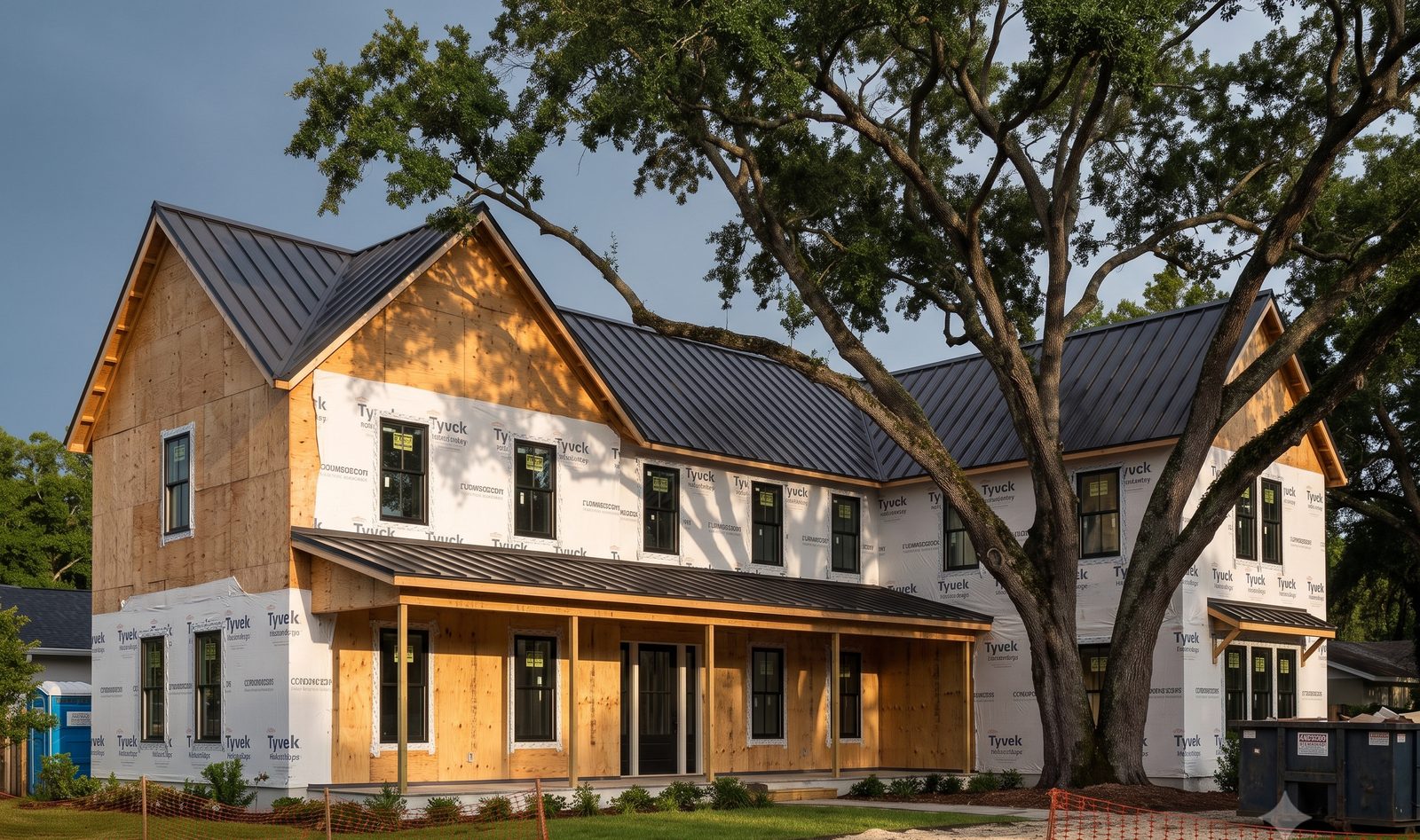 Stage 4 · Dried in
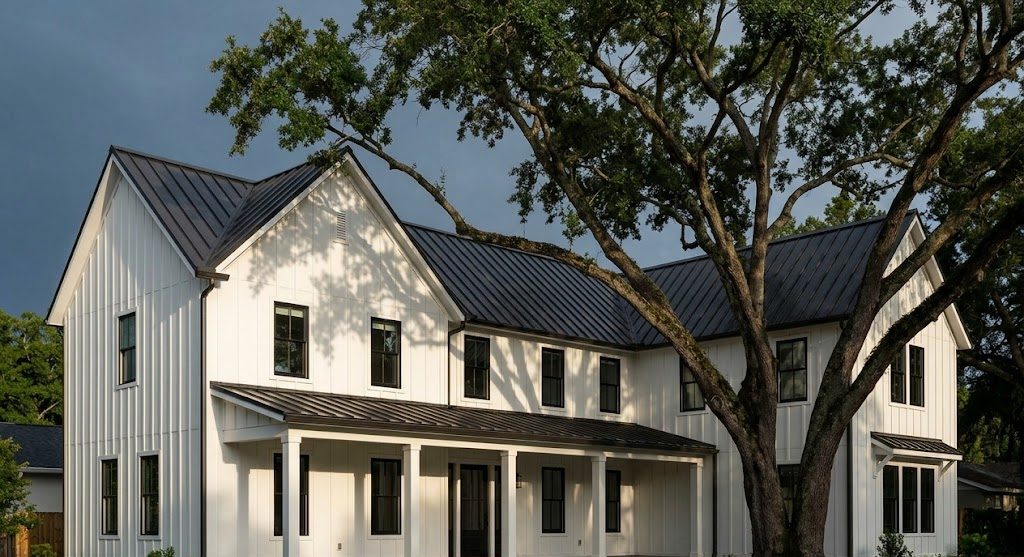 Stage 5 · Finished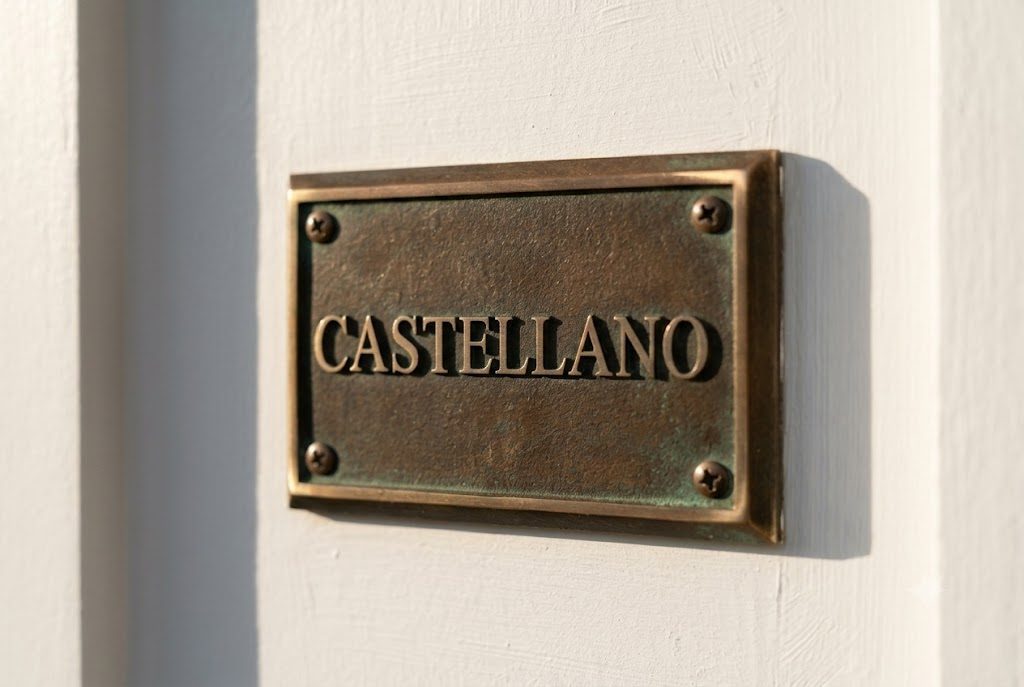
The last thing that happens is the plate.
It goes on after the blue tape is gone and before the keys change hands. Aurelio set the first one in 1979 with a hand drill and he has been at most of them since.
It is the only part of the process that is purely ceremonial, and it is the part everybody remembers. It also means that for the rest of the time you own the house, our name is beside your front door, which is a useful thing for a builder to have to think about while he is deciding whether a detail is good enough.
Three questions about the process.
Can I visit the site whenever I want?
Yes, on any working day, and we would rather you did. The only rule is boots and a call to the superintendent first, because there are two or three afternoons in a build when a crane or a pour makes the site genuinely unsafe. Some clients come once a month. One came every single evening for eleven months, and his house is better for it.
Who is actually on my site every day?
One superintendent, and he has one house at a time. That is the expensive decision inside our four to six a year, and it is the one that people notice. The framing crew has worked for us for twenty two years. The same plumber has been on every Castellano house since 2009. Continuity is the whole product.
What happens if a hurricane hits during the build?
We dry in as early as the sequence allows, because a framed and unwrapped house is the vulnerable one. If a storm is named and tracking, the site is cleared and strapped and the crews stand down, which usually costs three to seven days. One of our last twelve houses lost seven weeks to a storm that arrived in its framing window, and it is on the chart on sheet 04 with the reason next to it rather than averaged away.